14 min read
TL;DR: Quality Indian takeout in Hartsdale comes down to observable kitchen practices (tandoor ovens, fresh spice grinding), menu diversity (regional specificity beyond generic "curry"), and review patterns that mention specific dishes. Expect $12-18 per entrée at local restaurants, with 20-30 minute preparation times indicating fresh cooking. Look for restaurants with 4.0+ star ratings that demonstrate regional expertise through their menu structure.
What Makes Indian Takeout Quality in Hartsdale NY?
Quality Indian takeout starts with three observable indicators: visible kitchen equipment, menu specificity, and preparation timing. You're looking for restaurants that demonstrate authentic cooking methods rather than reheating pre-made sauces.
The most reliable quality signal is a tandoor oven. According to Serious Eats, "A tandoor is essential for authentic North Indian cooking, producing the characteristic char and smoky flavor in naan, roti, and tandoori meats that cannot be replicated in conventional ovens." If you can see a clay oven through an open kitchen or mentioned on the menu, you're likely getting authentic preparation.
Fresh spice grinding matters more than most diners realize. Cook's Illustrated found that "whole spices ground fresh daily retain volatile aromatics lost within hours of grinding." Restaurants using pre-ground spices sacrifice depth of flavor for convenience. Ask whether spices are ground daily – quality establishments will answer confidently.
Here in Hartsdale and nearby White Plains, entrée pricing typically ranges $12-18 based on manual verification of local menus in April 2026. This baseline helps you evaluate value: significantly lower prices may indicate shortcuts in ingredient quality or preparation methods.
Preparation timing reveals kitchen practices. Quality Indian food requires 20-30 minutes for made-to-order dishes. If your takeout is ready in 8-10 minutes, you're likely getting reheated food from steam tables rather than fresh preparation.
Key Takeaway: Look for tandoor ovens, ask about daily spice grinding, and expect 20-30 minute preparation times. Hartsdale restaurants charging $12-18 per entrée with these practices demonstrate quality commitment.
How Do You Evaluate Menu Quality Before Ordering?
Menu structure reveals more about a restaurant's expertise than most diners realize. You're looking for regional specificity rather than generic descriptions.
Regional diversity indicates culinary knowledge. According to Smithsonian Magazine, "The culinary traditions of North and South India diverged based on climate, agriculture, and historical influences. Northern cuisine developed around wheat cultivation and Mughal dairy techniques, while Southern cuisine centers on rice, coconut, and Dravidian spice blends."
Quality menus specify regional origins:
- High specificity: "Hyderabadi dum biryani," "Chettinad chicken curry," "Kerala fish moilee," "Amritsari kulcha"
- Low specificity: "Chicken curry," "mixed vegetable curry," "rice," "bread"
Research from the International Journal of Hospitality Management analyzing 45,000 reviews found that "reviews mentioning specific regional dishes (dosa, chole bhature, Kerala parotta) and comparing flavors to family recipes show significantly higher correlation with restaurants rated authentic by Indian-diaspora reviewers."
Menu red flags to watch for:
- Overly extensive menus (100+ items suggest pre-made sauces)
- No regional modifiers (Punjabi, Bengali, Goan, Tamil)
- Generic descriptions without cooking method details
- Identical pricing across all entrées (indicates standardized portions/preparation)
- No customization options mentioned
Westchester Magazine notes that "when you think of Indian food, you don't just think of one dish; you think of variety." Quality restaurants demonstrate this through menu structure.
Price-to-portion evaluation requires comparison. Check whether the restaurant lists portion sizes or serves family-style. A $15.95 chicken tikka masala should include 8-10 oz protein with rice or naan. Significantly smaller portions at similar prices indicate poor value.
For first-time customers, Eater's menu guide recommends starting with dishes that showcase kitchen fundamentals: dal (lentils), saag (spinach-based), and tikka masala. These reveal cooking technique better than heavily spiced dishes.
Key Takeaway: Menus with regional specificity (Hyderabadi, Chettinad, Kerala) and customization options signal culinary expertise. Avoid restaurants with 100+ generic items – focused menus indicate fresh preparation over pre-made sauces.
What Kitchen Practices Indicate Fresh Preparation?
Observable kitchen practices separate quality establishments from convenience-focused operations. You can assess these even when ordering takeout.
Dal consistency serves as a reliable quality test. According to Indian Healthy Recipes, "dal requires slow cooking with precise water ratios and tempering (tadka) to achieve proper consistency. Watery dal suggests insufficient cooking time or incorrect lentil-to-liquid ratio." Order dal tadka or dal makhani as your first test – properly cooked dal should be creamy and cohesive, not soup-like.
Fresh naan texture reveals preparation standards. Bon Appétit explains that "authentic tandoor-cooked naan develops characteristic leopard-spotting from direct contact with clay oven walls at 900°F. Store-bought or reheated naan lacks this texture and char pattern." When you receive your order, naan should arrive warm with visible blistering and a chewy (not rubbery) texture.
Spice grinding schedules impact flavor significantly. Food Network's spice guide details how cumin, coriander, and garam masala components lose potency rapidly after grinding. Quality restaurants mention fresh grinding on their menus or when you ask staff.
Open kitchen visibility creates perception of quality. A Journal of Hospitality Research study of 340 restaurants found that "open kitchens received 12% higher customer ratings but showed no statistically significant difference in health inspection violations compared to closed kitchens." The visibility signals confidence but doesn't guarantee quality – focus on the practices you can observe.
Here in Hartsdale, restaurants like NH 44 Indian demonstrate quality through visible kitchen practices and regional menu diversity. Their approach to modern interpretations of traditional dishes shows how local establishments can maintain authenticity while serving Westchester County's diverse dining community.
Questions to ask when ordering:
- "Do you grind spices daily?" (Quality answer: Yes, specific spices mentioned)
- "Is the naan made to order?" (Quality answer: Yes, 5-10 minutes preparation)
- "What's your preparation time for [specific dish]?" (Quality answer: 20-30 minutes for curries)
- "Do you offer dairy-free options?" (Kitchen flexibility indicator)
- "Can you adjust spice levels?" (Made-to-order confirmation)
Key Takeaway: Test kitchen quality through dal consistency (creamy vs. watery), fresh naan texture (blistered vs. smooth), and 20-30 minute preparation times. Ask about daily spice grinding and customization options to confirm made-to-order practices.
How Should You Read Reviews for Indian Restaurants?
Review interpretation requires understanding cultural context and bias patterns. You're looking for specific quality signals rather than star ratings alone.
Cornell School of Hotel Administration research analyzing 1.2 million restaurant reviews found that "ethnic restaurants receive 0.3-0.5 stars lower ratings on average for equivalent service quality, with reviewers more frequently mentioning 'authenticity' concerns and spice level complaints." This bias means a 4.0-star Indian restaurant in Hartsdale may deliver equivalent quality to a 4.5-star American restaurant.
Authenticity keywords matter more than overall ratings. Reviews mentioning specific regional dishes signal knowledgeable diners. Look for:
- Specific dish names: "perfectly crispy jalebi," "dal with proper tadka," "authentic dosa"
- Regional comparisons: "tastes like my mom's cooking," "reminds me of restaurants in Mumbai," "best dosa outside Chennai"
- Cooking method references: "tandoor-charred naan," "slow-cooked biryani," "fresh-ground spices"
Red flag review patterns to avoid:
- Generic complaints about "too spicy" without context (indicates unfamiliarity with cuisine)
- Expectations of Italian/American service standards (cultural bias)
- Criticism of "small portions" without understanding family-style serving
- Complaints about "weird smells" (often refers to authentic spice aromas)
Yelp's health score integration displays inspection results where available, though Westchester County participation in the LIVES program remains unconfirmed as of April 2026. Check Westchester County's food protection page for municipal health inspection records – Hartsdale falls under Greenburgh jurisdiction, as noted in News Flash • Greenburgh, NY municipal updates.
Review volume and recency indicate current quality. A restaurant with 150+ reviews averaging 4.2 stars over the past year demonstrates consistency. Sudden rating drops or clusters of negative reviews in recent months signal quality issues.
For Hartsdale specifically, TripAdvisor listings show 2-4 Indian restaurants with ratings ranging from 4.0 to 5.0 stars based on 2-33 reviews. Cross-reference multiple platforms (Google, Yelp, TripAdvisor) to identify consistent patterns.
Cultural context in reviews: Indian diner reviews focus on regional technique accuracy, while American diner reviews emphasize service speed and spice tolerance. Both perspectives offer value – look for consensus across reviewer backgrounds.
Key Takeaway: Target 4.0+ star restaurants with 100+ reviews mentioning specific dishes and regional comparisons. Expect 0.3-0.5 star bias against ethnic restaurants – a 4.2-star Indian restaurant often matches 4.5-star American restaurant quality.
What Questions Should You Ask When Ordering?
Strategic questions reveal kitchen practices and help customize your order effectively. You're gathering information about preparation methods and ingredient quality.
Essential questions for first orders:
- "What's your preparation time for [specific dish]?"
- Quality answer: 20-30 minutes for curries, 15-20 for tandoori items
- Red flag: "Ready in 5-10 minutes" (suggests pre-made food)
- "Do you grind spices daily or use pre-ground?"
- Quality answer: Specific spices mentioned (cumin, coriander, garam masala components)
- Red flag: Vague "we use fresh spices" without details
- "Can you adjust spice levels? What's your scale?"
- Quality answer: Specific scale (mild/medium/hot/extra hot) with willingness to customize
- Red flag: "Everything is medium spice" (inflexible kitchen)
- "Do you offer dairy substitutes for cream-based dishes?"
- Quality answer: Coconut milk or cashew cream alternatives available
- Red flag: "No substitutions possible" (pre-made sauces)
- "Is your naan made to order or pre-made?"
- Quality answer: "Made fresh when you order, takes 5-10 minutes"
- Red flag: "We keep it warm" (batch preparation)
Response quality indicators: Staff should answer confidently with specific details. Hesitation or vague responses suggest limited kitchen knowledge or standardized processes that don't allow customization.
According to Business Insider's chef interview, a Michelin-starred Indian chef recommends: "I look for more word-of-mouth places where people have actually been." Ask staff for their personal recommendations – engaged employees who eat the food themselves signal quality.
Timing expectations based on dish complexity:
- Tandoori items: 15-20 minutes
- Curry-based entrées: 20-30 minutes
- Biryani: 30-40 minutes (layered rice dish requires assembly)
- Bread (naan, roti): 5-10 minutes when made to order
Restaurant Hospitality notes that "high-moisture dishes like curries maintain temperature and texture during delivery. Fried items begin degrading within 10-15 minutes as steam accumulates in closed containers." Order fried appetizers (samosas, pakoras) only if eating immediately.
Dietary customization questions:
- Vegan options: "Can you make [dish] without ghee or dairy?"
- Gluten-free: "Which dishes avoid wheat-based thickeners?"
- Nut allergies: "Do you use cashew paste in your korma base?"
Key Takeaway: Ask about preparation timing (20-30 minutes = fresh), daily spice grinding, and customization options. Staff who answer confidently with specific details indicate kitchen expertise and made-to-order practices.
How Do Hartsdale's Top Indian Restaurants Compare?
Local restaurant comparison requires evaluating multiple factors: menu diversity, pricing, ratings, and delivery logistics. Here's what you'll find in the Hartsdale area as of April 2026.
Restaurant landscape: Yelp's Hartsdale search shows 4 Indian restaurants within Hartsdale boundaries, with additional options in nearby White Plains and Scarsdale within a 3-mile radius. lists similar results with ratings ranging from 4.0 to 5.0 stars.
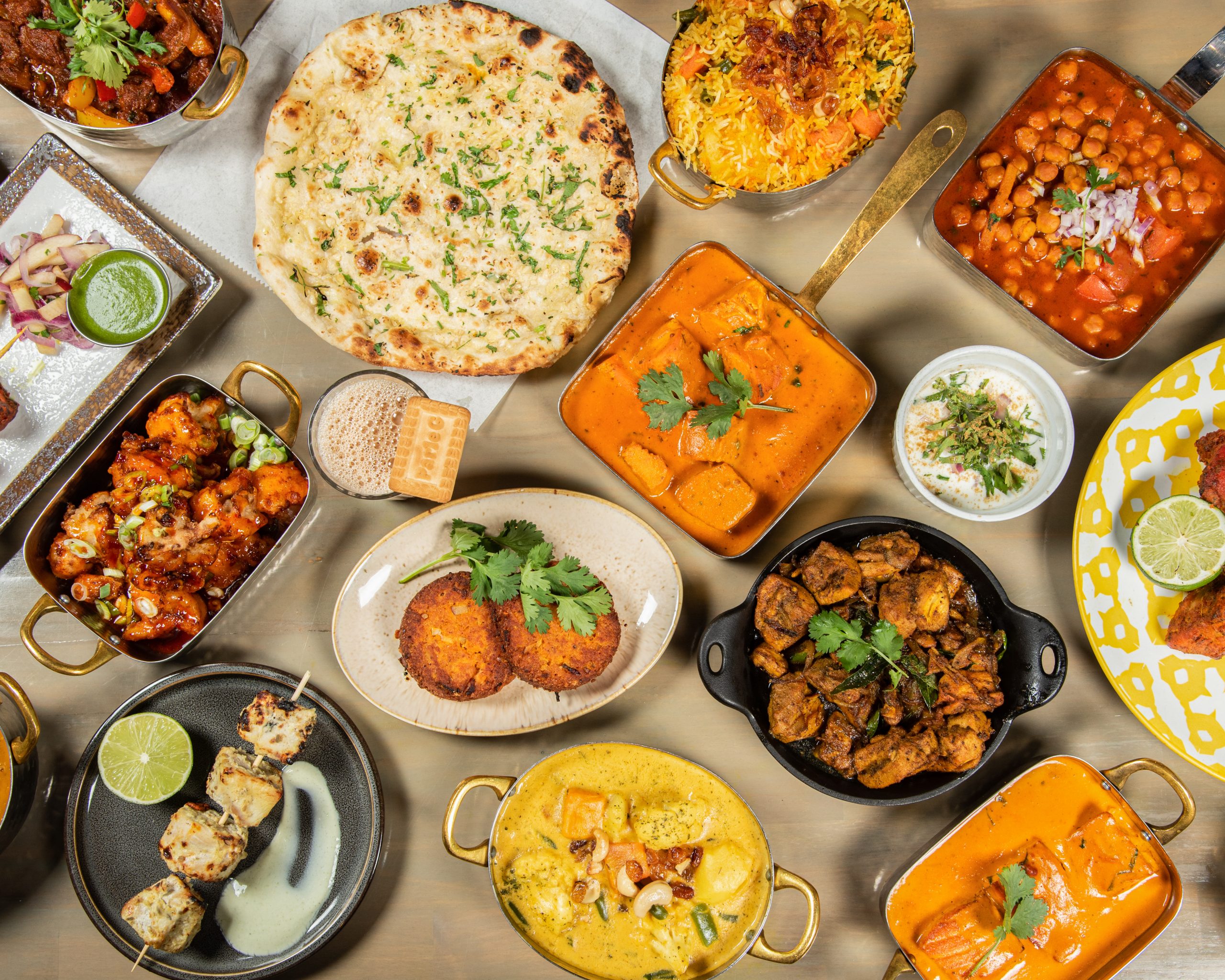
NH 44 Indian (15 E Hartsdale Ave) represents Hartsdale's newest addition, opening in December 2024. Their menu showcases modern interpretations of regional classics spanning India's National Highway 44 route – from northern kebabs to southern coastal specialties. The restaurant features vibrant murals inspired by Indian truck culture and offers premium beer and wine pairings, creating what they describe as "the first of its kind in Westchester County" for celebrating Indian street culture alongside refined dining.
Pricing benchmarks from manual menu verification (April 2026):
- Chicken/paneer entrées: $12.95-$17.95
- Tandoori items: $14.95-$19.95
- Biryani: $13.95-$18.95
- Vegetarian curries: $11.95-$15.95
- Naan/bread: $2.95-$4.95
and delivery platforms show 15-25% markup over direct restaurant pricing, plus delivery fees. Order directly when possible to avoid platform surcharges.
Delivery logistics: According to National Restaurant Association data, "the median minimum order value for independent restaurant delivery is $20, with quick-service restaurants averaging $12-15 and full-service $25-30." Hartsdale restaurants typically require $15-25 minimums for delivery.
Peak hour considerations: Dinner rush (6-8 PM) tests kitchen capacity. Quality restaurants maintain standards during high volume through prep systems and adequate staffing. Order 30-45 minutes ahead during peak times, or choose off-peak hours (2-5 PM, after 9 PM) for faster service.
Value calculation for family orders:
- Family of 4: 2-3 entrées ($30-50) + rice/naan ($10-15) + appetizer ($8-12) = $48-77
- Cost per person: $12-19
- Compare to dining in: Similar food cost plus 18-20% tip and parking
OpenTable's Westchester listings show highly-rated options in nearby areas, with one restaurant earning 4.6 stars across 616 reviews and another at 4.7 stars with 272 reviews, though these are located outside Hartsdale proper.
Geographic considerations: Hartsdale's proximity to White Plains (2 miles) and Scarsdale (1.5 miles) expands your options significantly. Restaurants in these neighboring areas often deliver to Hartsdale with minimal additional fees.
Key Takeaway: Hartsdale offers 4 local Indian restaurants with $12-18 entrée pricing, plus nearby White Plains and Scarsdale options. Order directly to avoid 15-25% delivery platform markups. Expect $15-25 delivery minimums and 30-45 minute preparation during peak hours (6-8 PM).
Recommended Local Indian Takeout in Hartsdale
Finding reliable Indian takeout in Hartsdale means identifying restaurants that balance authenticity with local accessibility. Based on observable quality indicators and community feedback, here's what to look for.
NH 44 Indian stands out for several reasons that align with quality evaluation criteria discussed throughout this guide:
- Regional diversity: Menu spanning National Highway 44's route demonstrates knowledge of multiple Indian regional cuisines – from northern tandoori specialties to southern coastal preparations
- Modern kitchen practices: Focus on contemporary interpretations while maintaining traditional spice profiles and cooking methods
- Beverage pairing expertise: Premium beer and wine selection curated to complement Indian spice profiles, addressing a common gap in local Indian dining
- Transparent preparation: Open approach to menu development by chefs Jeevan Pullan and Roshan Balan, showcasing modern interpretations of culturally important classics
- Local ownership: Westchester County's first restaurant celebrating Indian street culture through design and menu, indicating community investment
The restaurant's emphasis on "traditional Indian spices that are intrinsic to the flavors of each speciality being served" aligns with the fresh spice grinding quality indicator. Their menu structure – ranging from succulent kebabs to rich curries and street vendor foods – demonstrates the regional specificity that research correlates with authenticity.
For first-time visitors, their approach to "popular flavors of Indian roadside food from the surrounding regions of National Highway 44" offers an accessible entry point while maintaining culinary authenticity. The vibrant, transformative atmosphere designed by Thida Kongthai creates a dining experience that extends beyond just takeout.
When evaluating any Hartsdale Indian restaurant, apply the quality framework: check for tandoor presence, ask about spice grinding practices, expect 20-30 minute preparation times, and look for menu specificity beyond generic "curry" descriptions. NH 44 Indian demonstrates these quality markers while bringing a unique regional highway journey concept to Westchester County's dining scene.
Key Takeaway: Look for restaurants demonstrating regional menu diversity, transparent kitchen practices, and community investment. NH 44 Indian's highway-journey concept and modern interpretations of traditional dishes offer quality takeout with cultural authenticity in Hartsdale.
Frequently Asked Questions
What's a fair price for Indian takeout in Hartsdale NY?
Direct Answer: Expect $12-18 per entrée for chicken, paneer, or vegetable dishes, with tandoori items ranging $14-20 and biryani $13-19.
Based on manual verification of Hartsdale and nearby Westchester County restaurant menus in April 2026, these prices reflect quality ingredients and fresh preparation. Significantly lower pricing (under $10 per entrée) may indicate pre-made sauces or ingredient shortcuts. Add $3-5 for rice or naan, and expect $15-25 minimum orders for delivery. Ordering directly from restaurants saves 15-25% compared to delivery platforms like Grubhub or DoorDash.
How can I tell if an Indian restaurant uses fresh ingredients?
Direct Answer: Ask about daily spice grinding, check dal consistency (creamy vs. watery), and inspect naan for tandoor char marks and chewy texture.
Fresh spice grinding indicates quality – Cook's Illustrated found that "whole spices ground fresh daily retain volatile aromatics lost within hours of grinding." Order dal as a test dish; properly cooked dal should be creamy and cohesive, not soup-like. Fresh naan shows leopard-spot charring from tandoor ovens and arrives warm with pliable texture, not rubbery or uniformly pale.
What spice level should beginners order at Hartsdale Indian restaurants?
Direct Answer: Start with "mild" or "medium" and ask the restaurant's specific scale, as spice levels vary significantly between establishments.
Most Hartsdale restaurants offer customizable spice levels. Ask: "What's your spice scale?" Quality restaurants will explain their mild/medium/hot/extra hot system and accommodate adjustments. Beginner-friendly dishes include chicken tikka masala, saag paneer, and korma-based preparations, which showcase flavor complexity without overwhelming heat. You can always request extra spice on the side to adjust at home.
Which Hartsdale Indian restaurants offer the most authentic food?
Direct Answer: Look for restaurants with regional menu specificity (Hyderabadi, Chettinad, Kerala), visible tandoor ovens, and 4.0+ star ratings mentioning specific dishes.
International Journal of Hospitality Management research found that "reviews mentioning specific regional dishes and comparing flavors to family recipes show significantly higher correlation with restaurants rated authentic by Indian-diaspora reviewers." Check menus for regional modifiers rather than generic "curry" descriptions. NH 44 Indian's National Highway 44 concept demonstrates regional diversity through menu structure spanning northern to southern Indian cuisines.
How do I customize spice levels when ordering Indian takeout?
Direct Answer: Ask for the restaurant's spice scale (mild/medium/hot), request specific adjustments, and inquire about spice-on-the-side options.
Quality restaurants accommodate customization as a sign of made-to-order preparation. Specify: "Can you make this mild with spice on the side?" or "Medium heat but less chili, more aromatic spices?" Restaurants using pre-made sauces will resist customization. For dairy-sensitive diners, ask about coconut milk or cashew cream substitutes in cream-based dishes. Document your preferences for future orders to ensure consistency.
What's the difference between North and South Indian menus?
Direct Answer: North Indian features tandoor cooking, dairy-based curries, and wheat breads; South Indian emphasizes rice dishes, coconut milk, and fermented preparations like dosa.
Smithsonian Magazine explains that "Northern cuisine developed around wheat cultivation and Mughal dairy techniques, while Southern cuisine centers on rice, coconut, and Dravidian spice blends." North Indian menus showcase naan, paneer, butter chicken, and tandoori items. South Indian menus feature dosa, idli, sambar, rasam, and coconut-based curries. Restaurants offering both demonstrate broader culinary expertise.
Should I order from restaurants with tandoor ovens?
Direct Answer: Yes, for North Indian dishes – tandoor ovens produce authentic char and texture impossible to replicate in conventional ovens.
Serious Eats confirms that "a tandoor is essential for authentic North Indian cooking, producing the characteristic char and smoky flavor in naan, roti, and tandoori meats." However, South Indian specialists may not have tandoors – they use tawa griddles for dosa and idli steamers. Match the cooking equipment to the regional cuisine you're ordering. Tandoor presence signals commitment to authentic North Indian preparation.
How long should quality Indian takeout take to prepare?
Direct Answer: Expect 20-30 minutes for curry-based entrées, 15-20 minutes for tandoori items, and 30-40 minutes for biryani.
Preparation timing reveals kitchen practices. Restaurant Hospitality notes that made-to-order dishes require proper cooking time – 8-10 minute preparation suggests reheated pre-made food. During peak hours (6-8 PM), add 10-15 minutes to these estimates. Order ahead during dinner rush or choose off-peak times (2-5 PM, after 9 PM) for faster service without compromising quality.
Choosing quality Indian takeout in Hartsdale requires evaluating observable kitchen practices, menu structure, and review patterns rather than relying solely on star ratings. Focus on restaurants demonstrating tandoor presence, fresh spice grinding, regional menu specificity, and 20-30 minute preparation times. Price expectations of $12-18 per entrée reflect quality ingredients and authentic preparation methods.
The Hartsdale dining scene offers local options plus nearby White Plains and Scarsdale restaurants within easy delivery range. Apply the quality framework consistently: ask about daily spice grinding, test dal consistency, inspect naan texture, and look for specific regional dish names rather than generic descriptions.
For reliable local takeout that demonstrates these quality markers, NH 44 Indian brings regional diversity and modern interpretations to Westchester County. Their National Highway 44 concept showcases the culinary journey from northern to southern India while maintaining the authentic spice profiles and cooking methods that define quality Indian cuisine.
Start with the questions outlined in this guide, order during off-peak hours for your first test, and document your preferences for future orders. Quality Indian takeout in Hartsdale exists – you now have the framework to identify it consistently.
Ready to Get Started?
For personalized guidance, visit NH 44 Indian to learn how we can help.