13 min read
TL;DR: Indian cuisine has exploded across Connecticut and Hartsdale NY due to demographic shifts, regional diversity, and health-conscious dining trends. Westchester County alone hosts 20+ Indian restaurants, while Connecticut's affluent suburbs support multi-location chains like Jaipore Express. The cuisine's vegetarian options, spice customization, and delivery accessibility make it ideal for families and professionals seeking authentic yet approachable ethnic dining.
Why Has Indian Cuisine Grown in Connecticut and Hartsdale NY?
Indian food sales increased nearly 35 percent from 2006 to 2008, making it the fastest-growing ethnic cuisine segment according to market research group Mintel. While Indian food's share of the $2.2 billion ethnic food market remains modest at $40 million compared to Mexican food's $1.4 billion, the growth trajectory tells a compelling story – especially here in our community.
Hartsdale sits in Westchester County, New York, not Connecticut, but the distinction matters less than you'd think. Fairfield County Connecticut borders Westchester County directly, creating an integrated regional market where residents cross state lines for work, shopping, and dining. This corridor benefits from proximity to New York City's diverse food culture while maintaining suburban accessibility.
Three demographic drivers fuel this growth. First, Connecticut's technology and pharmaceutical sectors in Stamford and New Haven attract skilled professionals, including South Asian immigrants who bring culinary traditions with them. Second, affluent Fairfield County households (median income $101,194 according to US Census data) have disposable income for diverse dining experiences. Third, university towns like New Haven (Yale) and Storrs (UConn) cultivate adventurous palates among students and faculty.
Westchester County documented 21+ Indian restaurants as of 2024. Connecticut lacks comparable public data, but restaurant chains like Jaipore Express – which operates four locations across New Haven, New Canaan, Ridgefield CT, and Poughkeepsie NY – demonstrate market viability. Since opening in Ridgefield, owner Balan reported "phones have been ringing off the hook and email orders are coming in."
The American palate has evolved significantly. As one food scholar noted in Connecticut Post, "The American palate is no longer bland." This shift enables Indian restaurants to thrive beyond ethnic enclaves, serving diverse customer bases in predominantly non-South Asian suburbs.
Key Takeaway: Indian cuisine grew 35% from 2006-2008 nationally, with Connecticut's tech corridors and Westchester County's 21+ restaurants demonstrating strong regional adoption driven by affluent demographics and evolving American taste preferences.
What Makes Hartsdale NY a Hub for Indian Restaurants?
Hartsdale's position as an Indian food destination stems from geographic and demographic advantages. Located just 5-10 miles from Connecticut's border, Hartsdale serves both Westchester residents and nearby Fairfield County diners who commute through the area or seek dining options beyond their immediate neighborhoods.
The hamlet benefits from Westchester County's substantial South Asian population, though precise statistics require custom Census extraction. What's documented is restaurant density: Hartsdale hosts multiple Indian establishments including Masala Kraft and NH 44 Indian, which brings authentic street food from across India's National Highway 44 corridor – spanning 2,555 miles from north to south India.
NH 44 Indian exemplifies modern Indian dining concepts. Developed by chefs Jeevan Pullan and Roshan Balan, the restaurant showcases regional specialties from Punjab to Kerala, moving beyond stereotypical curry-focused menus. The vibrant, truck-art-inspired interiors designed by Thida Kongthai create an atmosphere celebrating Indian street culture – the first of its kind in Westchester County. Premium beer and wine pairings complement the cuisine, appealing to sophisticated diners seeking complete culinary experiences.
Customer demographics span multiple segments. Indian food enthusiasts seek authentic regional dishes unavailable at generic restaurants. Professionals appreciate upscale takeout options for busy weeknights. Families value diverse menus accommodating various dietary preferences and spice tolerances. Food adventurers explore beyond familiar dishes to discover regional Indian specialties.
Competition density might seem concerning – multiple Indian restaurants within miles of each other – but demand appears sufficient. Chutney Masala, another Westchester establishment, maintains 4.5 stars across 654 reviews, with customers praising "exceptional" food and "authentic flavors – truly the best Indian food I've had outside my grandma's kitchen."
The Hartsdale market demonstrates restaurant sustainability through multi-location success. Chains operating in both Connecticut and New York indicate cross-border customer mobility and sufficient demand to support expansion rather than cannibalization. According to CT's top Indian restaurants of 2026, establishments like Chef Prasad and Jewel of Himalaya were recognized among Connecticut Magazine's expert selections, highlighting the region's culinary excellence.
Key Takeaway: Hartsdale's 5-10 mile proximity to Connecticut, combined with Westchester County's affluent demographics and restaurants like NH 44 Indian offering authentic regional specialties, creates a dining hub serving both states' residents seeking diverse Indian cuisine beyond generic curry menus.
How Does Regional Indian Cuisine Diversity Drive Popularity?
India's 28 states produce distinct regional cuisines, yet most American Indian restaurants serve Punjabi-North Indian food. Research explains this dominance: Punjabi cuisine's dairy-heavy, protein-rich dishes with customizable spice levels proved most palatable to Western audiences. Butter chicken, tikka masala, naan, and paneer dishes became American Indian food defaults.
This standardization created opportunity for differentiation. Restaurants offering South Indian (dosa, idli, sambhar), Bengali (fish curry), Gujarati (dhokla), or street food specialties attract customers seeking authentic diversity. According to Catering by Tandoor, there are over 30 regionally recognized styles of Indian cuisine within India – far exceeding what most American diners experience.
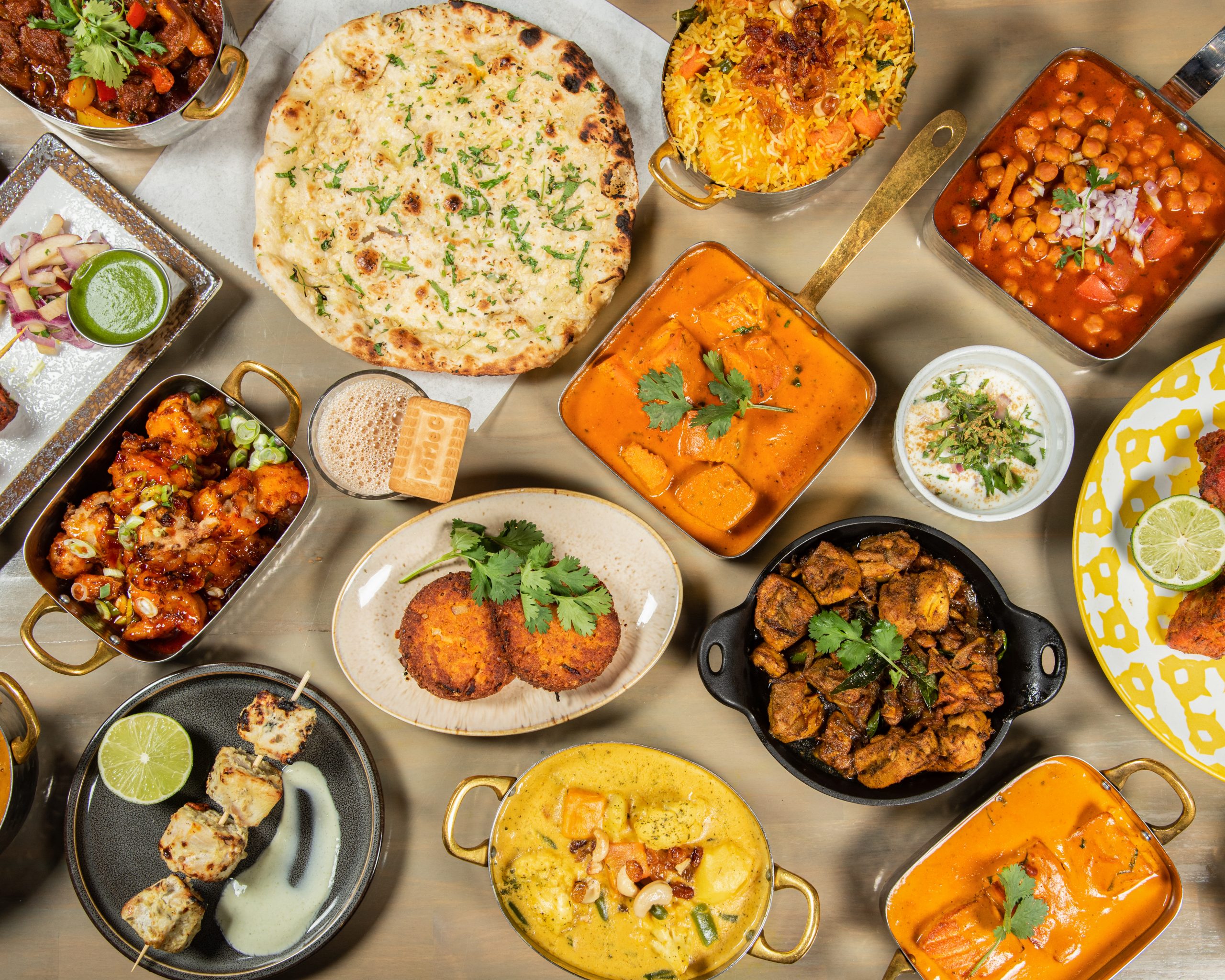
NH 44 Indian addresses this gap by featuring dishes from regions along India's longest highway. The menu includes succulent kebabs, rich curries, and popular street vendor foods representing north-to-south culinary traditions. Traditional Indian spices intrinsic to each specialty's authentic flavor profile ensure regional accuracy rather than homogenized "Indian" taste.
Beyond curry misconceptions, Indian cuisine encompasses:
- Breads: Naan, roti, paratha, kulcha, bhatura
- Rice dishes: Biryani, pulao, lemon rice, curd rice
- Street food: Chaat, pav bhaji, vada pav, dosa
- Protein preparations: Tandoori, kebabs, curries, dry preparations
- Vegetarian specialties: Paneer dishes, dal varieties, vegetable curries
- Desserts: Kulfi, gulab jamun, kheer, jalebi
The word "kulfi" itself comes from Persian term for covered cup, illustrating Indian cuisine's historical cross-cultural influences. Rice, while India is one of the world's largest producers, was actually first cultivated in Thailand before becoming central to Indian cooking.
Menu expansion beyond curry attracts adventurous eaters. Street food integration – casual, shareable, intensely flavored – appeals to younger demographics familiar with food truck culture. Regional specialties provide conversation starters and Instagram moments that generic butter chicken cannot match.
Connecticut and Hartsdale restaurants capitalizing on this diversity differentiate themselves in competitive markets. When customers can choose between ten restaurants serving identical tikka masala or one offering authentic Hyderabadi biryani and Kerala fish curry, the unique option captures attention.
Key Takeaway: India's 30+ regional cuisines offer differentiation opportunities beyond Punjabi-dominated American menus. Restaurants like NH 44 Indian featuring authentic street food and regional specialties from across India's 2,555-mile National Highway 44 attract adventurous diners seeking diversity beyond stereotypical curry dishes.
Why Do Health-Conscious Connecticut Diners Choose Indian Food?
Indian cuisine's vegetarian tradition aligns perfectly with plant-based diet trends. Many Indian regions practice dairy-vegetarian cooking (no meat, fish, or eggs but including dairy products like paneer cheese, ghee, and yogurt). This creates extensive vegetarian menu sections – often 40% or more of offerings compared to 15% at typical American restaurants.
Turmeric, Indian cuisine's signature golden spice, contains curcumin with documented anti-inflammatory and antioxidant properties according to National Institutes of Health research. Health-conscious diners recognize these benefits, viewing Indian food as functional nutrition rather than just ethnic dining. Research from Missing data in primary care research: importance, implications and approaches shows how comprehensive health data collection supports evidence-based dietary choices, which many Connecticut diners apply when evaluating cuisine options.
Lentil-based dishes (dal, sambhar) provide plant-based protein without meat's saturated fat. A serving of dal delivers approximately 18 grams of protein plus fiber, iron, and folate. Compared to American casual dining's burger-and-fries default, Indian vegetable curries with lentils offer superior nutritional profiles.
Connecticut's affluent suburbs demonstrate high wellness culture participation, though specific yoga studio density or wellness market data wasn't available for this analysis. The confluence of Indian cuisine's vegetarian options and regional health trends likely contributes to popularity, even if direct causation remains unverified.
Not all Indian food qualifies as health food. Cream-heavy curries, fried items (pakora, samosa, bhatura), and butter-laden naan are calorie-dense. Tandoori grilled proteins, vegetable curries with tomato-based sauces, and roti (whole wheat flatbread) represent healthier choices. Nutritional value depends entirely on selections.
Vegan diners face challenges despite vegetarian abundance. Traditional Indian vegetarian cooking heavily incorporates dairy – paneer cheese, ghee (clarified butter), yogurt-based curries. Vegan options exist (vegetable curries, lentil dishes, roti) but require asking about preparation methods to avoid hidden dairy ingredients.
Spice benefits extend beyond turmeric. Ginger aids digestion. Cumin supports metabolism. Coriander provides antioxidants. Cardamom offers anti-inflammatory effects. Indian cooking's spice complexity delivers functional health benefits alongside flavor.
Key Takeaway: Indian cuisine's 40% vegetarian menu options, turmeric's documented anti-inflammatory benefits, and protein-rich lentil dishes appeal to health-conscious Connecticut diners seeking nutritious alternatives to American casual dining's typical offerings, though cream-heavy curries and fried items require careful selection.
What Role Does Americanization Play in Connecticut's Indian Food Scene?
Punjabi cuisine succeeded in America partly because its dairy-based richness, protein emphasis, and customizable spice levels adapted easily to Western preferences. Restaurants defaulting to mild-medium spice levels accommodate American heat tolerance while offering "extra spicy" upon request for adventurous diners.
Spice level customization has become standard practice. Restaurants typically offer mild, medium, hot, and sometimes "Indian hot" scales. This accessibility removes intimidation barriers for first-timers while satisfying heat-seeking regulars. The approach mirrors Chinese-American restaurants' similar adaptation strategies.
Fusion dishes remain less common in Indian cuisine than Chinese-American innovations like General Tso's chicken, but experimentation occurs. Some restaurants offer Indian-spiced pizzas, tikka masala pasta, or curry-flavored burgers. These fusion items serve as gateway experiences for extremely cautious diners.
Tikka masala itself represents British-Indian fusion – created in UK restaurants to suit British palates, now considered standard Indian fare globally. This illustrates how "authentic" versus "Americanized" distinctions blur over time as adapted dishes become culinary traditions themselves.
Modern formats like NH 44 Indian's street food concept adapt traditional preparations for American casual dining expectations. Street vendor foods traditionally consumed standing at roadside stalls transform into sit-down restaurant experiences with premium beverage pairings. The food remains authentic; the service format Americanizes.
Family-friendly accommodations matter in suburban Connecticut markets. Restaurants in towns like Ridgefield, New Canaan, and Scarsdale likely offer kid-friendly options (mild butter chicken, naan, rice) alongside traditional preparations for adult diners. This dual-menu approach maximizes market reach.
YouTube hosts abundant Indian cooking tutorials for beginners, indicating mainstream accessibility and interest. Home cooks attempting Indian recipes develop familiarity that translates to restaurant confidence. Educational content demystifies cuisine previously considered exotic or intimidating.
Allergen accommodations represent another Americanization. Gluten-free diners can choose rice-based dishes and avoid naan. Dairy-free options exist in South Indian and some North Indian preparations. Nut allergies require careful navigation given cashew and almond use in certain curries.
The adaptation spectrum ranges from palatability adjustments (milder default spice) to format changes (street food in sit-down settings) to fusion innovation (tikka masala pizza). None inherently degrades authenticity – they enable cuisine accessibility for broader audiences while traditional preparations remain available for purists.
Key Takeaway: Americanization through customizable spice levels, family-friendly options, and modern formats like NH 44 Indian's street food concept enables Indian cuisine accessibility without eliminating authentic regional preparations, creating dual-appeal menus serving both adventurous diners and cautious first-timers in Connecticut's suburban markets.
How Have Takeout and Delivery Options Expanded Indian Cuisine Reach?
Pandemic-era delivery expansion accelerated ethnic restaurant accessibility nationally, though Connecticut-specific Indian restaurant delivery statistics weren't available for this analysis. What's verifiable: DoorDash, Uber Eats, and Grubhub now list Indian restaurants throughout Connecticut and Westchester County, confirming current widespread availability.
Indian food's format suits delivery particularly well. Curries, rice, and dal maintain quality in containers better than crispy fried foods. Saucy dishes don't dry out during transport. Naan and roti soften slightly but remain edible. Biryani travels exceptionally well as a complete one-dish meal.
Family-style ordering patterns align with Indian cuisine's shareable nature. A typical delivery order includes multiple curries, rice, naan, and perhaps appetizers – designed for 3-4 people to share rather than individual entrees. This communal dining approach suits families and groups better than individually portioned American meals.
Price point accessibility varies. While specific Connecticut Indian delivery pricing wasn't documented, Indian food generally costs $15-22 per entrée compared to American casual dining's $18-25 range. Family-style orders of $50-75 feeding four people offer reasonable value, especially compared to equivalent American restaurant delivery.
Delivery platform availability doesn't guarantee adoption. Some traditional Indian restaurants resist third-party delivery due to commission costs (typically 20-30% of order value). Others embrace it as essential revenue stream, particularly post-pandemic when dine-in traffic declined. As noted by 000:44k1, – ERIC – Department of Education, case study analysis reveals successful restaurant adaptations often involve multi-part strategies combining traditional service with modern delivery options.
Takeout predates delivery apps by decades. Indian restaurants have always offered takeout given cuisine's transport-friendly nature. Apps simply expanded reach beyond customers willing to drive to restaurants, capturing convenience-seeking suburban households.
Reheating considerations matter for delivery quality. Rice and curries reheat well in microwaves. Naan requires oven or stovetop reheating to restore texture. Fried items (pakora, samosa) lose crispness but remain edible. Restaurants sometimes include reheating instructions with delivery orders.
Key Takeaway: Indian cuisine's curry-based format travels well for delivery, with family-style ordering patterns ($50-75 feeding four people) offering value through shareable dishes. DoorDash and Uber Eats now list Connecticut and Hartsdale restaurants widely, though pandemic-period growth statistics specific to Indian food delivery weren't available.
FAQ: Indian Cuisine in Connecticut and Hartsdale NY
What are the best Indian restaurants in Hartsdale NY?
Direct Answer: Hartsdale's top Indian restaurants include NH 44 Indian for authentic street food spanning India's regions, and Masala Kraft for vegetarian-focused modern Indian cuisine.
NH 44 Indian stands out for its unique concept – dishes from along India's longest highway (2,555 miles) featuring regional specialties from Punjab to Kerala. The vibrant truck-art-inspired interiors and premium beverage pairings create an upscale casual experience. Masala Kraft emphasizes vegetarian options with contemporary presentations appealing to health-conscious Westchester diners.
How much does Indian takeout cost in Connecticut?
Direct Answer: Indian takeout in Connecticut typically costs $15-22 per entrée, with family-style orders for four people ranging $50-75 including rice, naan, and multiple dishes.
Pricing varies by restaurant type and location. Casual spots in New Haven or Norwalk may offer lunch specials around $12-15. Upscale establishments in Fairfield County suburbs charge $18-25 for specialty entrées. Appetizers (samosa, pakora) run $6-10. Naan costs $3-5. Delivery fees and tips add $8-15 to total orders.
Is Indian food in Connecticut authentic or Americanized?
Direct Answer: Connecticut Indian restaurants range from highly authentic regional specialists to Americanized Punjabi-focused establishments, with most offering both traditional preparations and adapted dishes on dual-appeal menus.
Restaurants like NH 44 Indian prioritize authenticity through traditional spice blends and regional recipes. Others default to mild spice levels and familiar dishes (butter chicken, tikka masala) while offering authentic options upon request. Americanization enables accessibility without eliminating traditional cooking – customers choose their preference level.
Why is Punjabi cuisine so popular in Westchester County?
Direct Answer: Punjabi cuisine dominates because its dairy-heavy, protein-rich dishes with customizable spice levels proved most palatable to Western audiences, establishing it as American Indian food's default style.
Butter chicken, tikka masala, naan, and paneer dishes appeal to American preferences for creamy, mildly spiced foods. Early Indian immigrants to the US were often Punjabi, establishing restaurants serving their regional cuisine. This created self-reinforcing cycle where American diners expect Punjabi food when ordering "Indian," perpetuating its dominance despite India's 30+ regional cuisines.
What Indian dishes should first-timers order in Hartsdale?
Direct Answer: First-timers should start with butter chicken or chicken tikka masala (mild, creamy), garlic naan, vegetable samosas, and mango lassi to experience approachable Indian flavors before exploring spicier or more adventurous dishes.
These gateway dishes offer familiar textures (creamy sauces, fried pastries) with gentle spice introduction. After comfort with basics, progress to tandoori chicken, dal makhani, palak paneer, or biryani. Ask servers for spice level guidance – most restaurants accommodate "mild" requests for nervous newcomers.
How do I find vegetarian Indian options near me?
Direct Answer: Most Indian restaurants dedicate 40% or more of menus to vegetarian dishes; look for paneer (cheese) dishes, dal (lentils), vegetable curries, and South Indian specialties like dosa on menus.
Indian cuisine's dairy-vegetarian tradition ensures abundant meatless options at virtually every restaurant. Specify "vegetarian" when ordering to avoid confusion with chicken or lamb versions of similar dishes. Note that vegetarian doesn't automatically mean vegan – most dishes contain dairy (ghee, paneer, yogurt).
Which Connecticut Indian restaurants offer delivery?
Direct Answer: Most Connecticut Indian restaurants now offer delivery through DoorDash, Uber Eats, or Grubhub, with availability searchable by entering your zip code on delivery platform apps or websites.
Restaurants in Stamford, Norwalk, New Haven, Ridgefield, and other Fairfield County towns typically appear on multiple platforms. Some restaurants maintain proprietary delivery through their own drivers. Call restaurants directly to ask about delivery radius and minimum order requirements if not listed on apps.
What makes Indian food healthier than other cuisines?
Direct Answer: Indian cuisine offers extensive vegetarian options (40% of menus), protein-rich lentil dishes, and spices like turmeric with documented anti-inflammatory benefits, though cream-heavy curries and fried items require careful selection.
Tandoori grilled proteins, vegetable curries with tomato-based sauces, dal, and roti represent nutritious choices. Avoid or limit cream-heavy kormas, fried pakoras and samosas, and butter-laden naan for healthier meals. Indian food's health value depends entirely on dish selection rather than inherent superiority over other cuisines.
Indian cuisine's growth across Connecticut and Hartsdale NY reflects demographic shifts, culinary diversity, and evolving American palates. The region's affluent suburbs support restaurants ranging from traditional Punjabi establishments to innovative concepts like NH 44 Indian's street food focus. Health-conscious diners appreciate vegetarian abundance and functional spice benefits, while delivery accessibility brings authentic flavors to suburban households.
Whether you're exploring regional Indian specialties for the first time or seeking authentic preparations beyond generic curry, our community's restaurant landscape offers options for every preference and spice tolerance. Visit NH 44 Indian in Hartsdale to experience authentic dishes from across India's longest highway, or explore Connecticut's growing Indian dining scene through the diverse establishments now serving Fairfield County and beyond.
Ready to Get Started?
For personalized guidance, visit NH 44 Indian to learn how we can help.