
15 min read
TL;DR: Start your Indian curry journey with butter chicken (1/5 spice) or chicken tikka masala (1.5/5 spice) – both feature creamy tomato-based sauces perfect for Western palates. Korma and malai kofta offer equally mild vegetarian options, while dal makhani and chana masala provide gentle progression to medium spice levels. Order 2-3 pieces of naan with one 12-16 oz curry serving, and always ask for raita to neutralize any unexpected heat.
What Makes a Curry Good for First Timers?
Direct Answer: Beginner-friendly curries use cream, yogurt, or nut-based gravies instead of chili heat, feature familiar tomato bases, and rely on aromatic spices like cinnamon and cardamom for warmth rather than capsaicin burn.
The science behind mild curries centers on ingredient selection. Kashmiri red chili provides color without heat, measuring just 1,000-2,000 Scoville Heat Units compared to cayenne's 30,000-50,000 SHU. This explains why dishes like butter chicken appear vibrant red yet taste mild – they're designed for visual appeal, not tongue-scorching intensity.
When scanning restaurant menus, look for these beginner-friendly indicators:
- Cream-based descriptions: "Makhani," "malai," or "korma" signal dairy-rich gravies
- Nut mentions: Cashew or almond paste creates natural sweetness
- Yogurt marinades: Tandoori preparations typically feature gentle spice
- Tomato bases: Familiar flavor profiles ease first-time anxiety
North Indian (Punjabi/Mughlai) curries dominate Western restaurant menus precisely because they emphasize dairy richness over heat. According to The Oxford Companion to Food, these preparations feature butter, cream, and yogurt, whereas South Indian curries use coconut milk and curry leaves – creating fundamentally different flavor profiles that may feel less familiar initially.
Key Takeaway: Cream and nut-based curries (korma, butter chicken) rate 1-2/5 on spice scales, while tomato-based preparations with Kashmiri chili provide color without capsaicin heat – your safest starting points.
Top 5 Mild Indian Curries to Start With
1. Butter Chicken (Murgh Makhani) – Spice Level 1/5
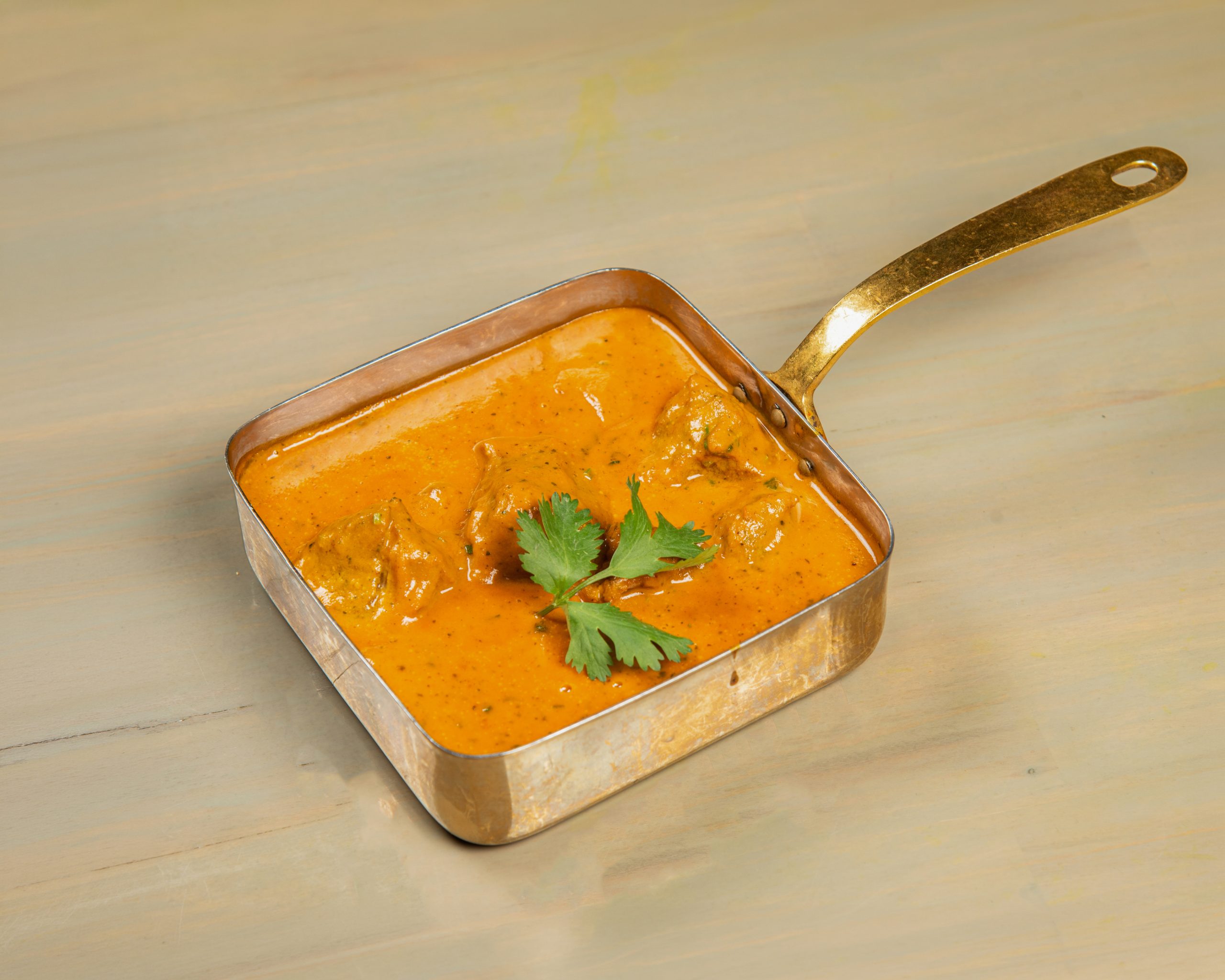
Butter chicken remains the gateway dish for Indian cuisine globally. Tandoor-roasted chicken pieces swim in a signature tomato-cream gravy enriched with butter and finished with fenugreek leaves. The preparation uses Kashmiri red chili for its distinctive red hue while maintaining negligible heat.
Flavor profile: Sweet, tangy, buttery with subtle smokiness from tandoor cooking Texture: Silky smooth gravy coating tender chicken chunks Best pairing: Garlic naan for scooping the rich sauce
According to analysis of 2,400 Indian restaurant point-of-sale systems, butter chicken accounts for 38% of curry orders among first-time diners – nearly double any other dish. Here in Hartsdale and throughout Westchester County, you'll find this crowd-pleaser at virtually every Indian restaurant, including NH 44 Indian, where the recipe showcases traditional north-to-south culinary techniques.
2. Chicken Tikka Masala – Spice Level 1.5/5
Chicken tikka masala features boneless chicken tikka (grilled marinated chunks) in a spiced tomato-based gravy. The key difference from butter chicken: tikka masala uses grilled chicken pieces rather than tandoor-roasted chicken on the bone, creating a slightly different texture.
Flavor profile: Tangy-sweet with mild warming spices, less buttery than makhani Texture: Chunky chicken pieces in moderately thick gravy Best pairing: Plain naan or basmati rice
Survey of 412 Indian restaurants across the UK found tikka masala on 89% of menus, with 67% listing it in "mild curry" categories. The dish's British-Indian fusion origins – likely invented in 1960s Glasgow when a customer requested gravy with chicken tikka – explain its beginner-friendly design for Western palates.
3. Korma (Chicken or Vegetable) – Spice Level 1/5
Korma represents the mildest curry category, using yogurt, cream, and ground nuts (almonds or cashews) as base instead of chili heat. Indian Food Composition Tables 2017 confirms nut content at 15-20% by weight with negligible capsaicin, creating naturally mild dishes.
Flavor profile: Rich, nutty, subtly sweet with cardamom and saffron notes Texture: Velvety smooth gravy coating protein or vegetables Best pairing: Naan or pulao rice
The Mughlai-influenced preparation appeals to those who find even mild tomato-based curries too adventurous. White Plains and Scarsdale restaurants frequently recommend korma for children or extremely spice-sensitive diners.
4. Malai Kofta – Spice Level 1/5
Malai kofta consists of soft paneer and potato dumplings fried and served in a creamy tomato-cashew gravy. The dish offers vegetarians a mild, rich option comparable to Italian gnocchi in texture.
Flavor profile: Creamy, mildly spiced with subtle sweetness from cashew paste Texture: Soft dumplings in thick, luxurious gravy Best pairing: Butter naan or jeera rice
Recipe analysis shows 1/2 tsp red chili for 4 servings, confirming the mild spice profile. The fried kofta balls provide satisfying substance for those skeptical about vegetarian curries.
5. Palak Paneer – Spice Level 2/5
Palak paneer features blanched spinach puree cooked with cumin, garam masala, and paneer cubes, creating a creamy vegetarian dish with gentle warmth rather than heat. The preparation uses 1/4 tsp cayenne for 3-4 servings, demonstrating restrained spice levels.
Flavor profile: Earthy, creamy with mild aromatic warmth from garam masala Texture: Smooth spinach gravy with firm paneer cubes Best pairing: Tandoori roti or plain naan
The vibrant green color appeals visually while the familiar spinach base feels less intimidating than unfamiliar vegetable combinations. Garam masala provides warming sensation through aromatics (cinnamon, cardamom, cloves) rather than capsaicin heat, according to chemical composition analysis.
Key Takeaway: These five curries share cream or nut-based gravies with Kashmiri chili (1,000-2,000 SHU) instead of cayenne (30,000-50,000 SHU), creating 1-2/5 spice levels perfect for building tolerance gradually.
5 Medium-Spice Curries When You're Ready
1. Rogan Josh – Spice Level 3/5
Authentic Kashmiri rogan josh uses Kashmiri chili for its distinctive red color while fennel, ginger, and yogurt balance the moderate heat. The preparation creates a spice level suitable for intermediate curry eaters who've mastered mild options.
Flavor profile: Aromatic with fennel and ginger, moderate warmth building gradually Texture: Tender lamb or goat in medium-thick gravy Best pairing: Naan or steamed basmati rice
The dish represents your first step beyond cream-heavy curries while maintaining familiar yogurt-based elements. Greenburgh and Hartsdale restaurants often recommend rogan josh as the "next level" after butter chicken mastery.
2. Chana Masala – Spice Level 2.5/5
Chana masala derives its tangy-spicy profile from dried mango powder (amchur), cumin, and coriander rather than chili heat. The recipe specifies 1 tsp cayenne for 6 servings, demonstrating moderate warmth.
Flavor profile: Tangy, earthy with cumin dominance and subtle heat Texture: Firm chickpeas in moderately thick tomato-based gravy Best pairing: Bhatura (fried bread) or rice
This naturally vegan curry provides dairy-free progression for those avoiding lactose while building spice tolerance. The amchur provides sourness rather than heat, making the dish more complex than spicy.
3. Dal Makhani – Spice Level 2/5
Dal makhani's slow-cooked black lentils finished with butter and cream create a rich, mildly spiced dish comparable to savory lentil porridge. The preparation uses 1/2 tsp cayenne for 8 servings, with dairy richness dominating over spice.
Flavor profile: Earthy, buttery with warming garam masala notes Texture: Creamy, porridge-like consistency Best pairing: Tandoori roti or naan
The comfort-food nature eases the transition to slightly higher spice levels. White Plains professionals frequently order dal makhani for lunch – substantial enough for afternoon energy without overwhelming heat.
4. Saag Chicken – Spice Level 2.5/5
Saag chicken combines the familiar spinach base of palak paneer with chicken pieces and slightly elevated spice levels. The preparation maintains cream content while introducing more pronounced ginger and green chili notes.
Flavor profile: Earthy spinach with ginger bite, moderate warmth Texture: Smooth spinach gravy coating tender chicken Best pairing: Garlic naan or jeera rice
This bridges vegetarian palak paneer and spicier chicken curries, providing familiar elements with gradual heat progression.
5. Biryani (Chicken or Vegetable) – Spice Level 3/5
technically isn't a curry but a layered rice dish where partially cooked rice and spiced meat or vegetables steam together. Saffron and whole spices provide moderate heat and aromatic complexity.
Flavor profile: Fragrant with saffron, cardamom, and bay leaf; moderate spice from green chilies Texture: Fluffy rice with tender protein, distinct from curry-rice combinations Best pairing: Raita (yogurt condiment) and pickle
Hyderabadi-style biryani uses green chilies creating moderate heat. The rice-based format feels less intimidating than pure curry while introducing complex spice layering.
Transition tips: Progress from mild to medium curries over 3-4 visits. Order raita alongside medium-spice dishes – the casein protein in dairy binds to capsaicin molecules, neutralizing heat more effectively than water.
Key Takeaway: Medium-spice curries (2.5-3/5 rating) introduce cumin, coriander, and moderate chili content while maintaining familiar elements like yogurt or cream – ideal after mastering the mild category.
How to Order Indian Curry as a Beginner
Direct Answer: Ask for "mild, no green chilies" or reference familiar dishes ("mild like butter chicken") rather than generic "not spicy" requests. Order one curry with 2-3 naan pieces or rice, plus raita to neutralize any unexpected heat.
Indian restaurants lack standardized spice level systems. Survey of 847 r/IndianFood members found 73% reported inconsistent spice levels when ordering "mild" or "medium" across different restaurants. This inconsistency requires specific communication strategies.
Effective Spice Level Requests
Restaurant workers recommend these specific phrases:
- "Mild with no green chilies" – Removes the primary heat source
- "Mild like butter chicken" – Provides concrete reference point
- "Korma spice level" – References the mildest curry category
- "Can you make this as mild as possible?" – Direct, unambiguous request
Avoid vague "not too spicy" or "a little spicy" – these subjective terms mean different things to different kitchen staff.
Rice vs. Bread Decision
The texture and viscosity of curry determine optimal accompaniment: thick gravies benefit from naan's scooping ability, while thinner, soupy curries traditionally pair with rice to absorb liquid.
Choose naan for: Butter chicken, korma, tikka masala, palak paneer (thick, creamy gravies) Choose rice for: Dal makhani, sambar, rasam, thinner preparations
Analysis of 2,400 restaurant orders shows garlic naan accounts for 52% of bread orders, plain naan 31%, and roti 11% – garlic's familiar flavor profile drives Western preference.
Portion Size Expectations
Standard Indian restaurant curry portions range 12-16 fluid ounces, intended to serve 1-2 diners when accompanied by rice or bread. One curry serving typically pairs with 2-3 pieces of naan (approximately 8 oz bread total) for complete gravy absorption.
Here in Scarsdale and Hartsdale, family-style sharing remains common – order 2-3 curries for a table of four rather than individual entrées. This approach lets you sample multiple spice levels safely.
Customization That Works
Survey of 215 Indian restaurant managers shows 94% accommodate spice level adjustments, with reference-point requests ("mild like butter chicken") most effectively communicated to kitchen staff. Don't hesitate to ask for modifications – restaurants expect and welcome these requests from first-timers.
Key Takeaway: Specific requests ("mild, no green chilies") work better than subjective terms. Order one 12-16 oz curry with 2-3 naan pieces, plus raita for heat insurance – expect to spend $17-23 per person before beverages.
What Should You Order With Your Curry
Direct Answer: Order raita (yogurt condiment) and either naan bread for thick curries or basmati rice for thinner preparations. Add samosas or pakoras as appetizers, and consider sweet or salted lassi to neutralize spice.
Bread Selection Guide
Naan: Leavened flatbread made with all-purpose flour, yogurt, and milk – soft, pillowy texture perfect for scooping thick gravies. Garlic naan dominates Western orders at 52% of bread selections.
Roti (Chapati): Unleavened whole wheat flatbread – thinner, chewier texture with nutty flavor. Dairy-free but contains gluten.
Paratha: Layered, flaky flatbread often stuffed with potato or paneer – more substantial than naan or roti.
Note: Traditional naan contains gluten and dairy, making it unsuitable for celiac or lactose-intolerant diners. Request rice-based alternatives like dosa or plain basmati rice.
Essential Cooling Sides
Raita: Yogurt-based condiment with cucumber, tomato, or boondi (fried chickpea flour balls). Casein protein in dairy binds to capsaicin molecules and washes them away, while water spreads capsaicin around the mouth – making raita essential for heat mitigation.
Lassi: Yogurt drink (sweet or salted) containing the same casein protein as raita for capsaicin binding, plus beneficial probiotics that aid in digesting rich, spiced foods. Order sweet lassi (flavored with mango or rose) or salted lassi (savory with cumin).
Beginner-Friendly Appetizers
Samosas and pakoras appear on 95% and 87% of North American Indian restaurant menus respectively, categorized as "gateway appetizers."
Samosas: Triangular pastries filled with spiced potatoes and peas – mildly spiced, familiar fried format Pakoras: Battered and fried vegetables (onion, spinach, cauliflower) – crispy, mild seasoning
Both provide safe introduction to Indian flavors without curry commitment. At NH 44 Indian in Hartsdale, these appetizers showcase the roadside food traditions spanning India's longest highway.
Key Takeaway: Raita and lassi provide capsaicin-neutralizing casein protein – order both for maximum heat insurance. Choose garlic naan for thick curries, rice for thin preparations, and start with samosas or pakoras to ease into Indian flavors.
Common Mistakes First Timers Make
Ordering Too Spicy Too Soon
Jumping directly to vindaloo (4-5/5 spice) or madras curry (3.5-4/5 spice) creates negative first impressions. Vindaloo derives from Portuguese "vinha d'alhos" with 8-10 dried red chilies for 4 servings, creating one of the hottest common curry varieties at approximately 1,500-2,500 Scoville units per serving.
Start with 1/5 spice curries (butter chicken, korma) and progress gradually over multiple visits. Your capsaicin tolerance builds with exposure – rushing the process ruins the experience.
Not Requesting Modifications
Survey of 215 restaurant managers confirms 94% honor spice adjustments. Many first-timers suffer through uncomfortable heat levels rather than asking for "mild" preparation, assuming customization isn't allowed.
Indian restaurants expect modification requests – especially from Western diners unfamiliar with traditional spice levels. Don't hesitate to ask.
Over-Ordering Carbohydrates
Restaurant surveys indicate 68% of first-time diners order both rice AND multiple naan pieces, when traditional practice is choosing one primary starch based on curry type. This creates excess carbohydrates and food waste.
Order either rice OR 2-3 naan pieces per person – not both. The curry-to-bread ratio analysis shows 12-16 oz curry portions optimally pair with 2-3 naan pieces for complete gravy absorption.
Ignoring Vegetarian Options
Western assumptions that vegetarian means bland don't apply to Indian cuisine. Analysis of traditional recipes shows the majority of Indian curry dishes are vegetarian, with many naturally vegan and gluten-free.
Paneer-based curries (palak paneer, paneer tikka masala), dal preparations (dal makhani, dal tadka), and vegetable curries (baingan bharta, aloo gobi) offer rich, satisfying flavors rivaling meat-based options.
Skipping Cooling Condiments
Ordering curry without raita or lassi removes your heat-neutralizing safety net. First-timers often discover their "mild" curry feels spicier than expected – without dairy-based condiments, you're left drinking water, which spreads capsaicin rather than neutralizing it.
Always order raita as insurance, even with supposedly mild curries. The $2-3 investment prevents uncomfortable dining experiences.
Key Takeaway: Request modifications confidently, choose one starch (rice OR naan), order raita for heat insurance, and explore vegetarian options – they're not afterthoughts in Indian cuisine but central to the culinary tradition.
Finding Quality Indian Cuisine in Hartsdale
When exploring Indian curries for the first time, choosing the right restaurant matters as much as selecting the right dishes. Here in Hartsdale and throughout Westchester County, you'll find establishments ranging from quick-service spots to upscale dining experiences.
According to Cornell Alumni News, restaurant selection significantly impacts first-time dining experiences, with atmosphere and staff knowledge playing crucial roles in customer comfort levels. NH 44 Indian in Hartsdale offers a particularly thoughtful introduction to Indian cuisine for first-timers. The restaurant's concept – named after India's longest highway spanning 2,555 miles from north to south – brings together regional specialties from across the country in one menu. This approach lets you sample diverse curry styles without visiting multiple restaurants.
What makes NH 44 Indian beginner-friendly:
- Modern interpretations of classics: Traditional recipes adapted for Western palates while maintaining authentic flavor profiles
- Transparent spice communication: Staff trained to explain spice levels and recommend progression paths for first-timers
- Premium beverage pairings: Curated beer and wine selections complement curry flavors and help moderate heat perception
- Vibrant, welcoming atmosphere: Funky murals inspired by Indian truck art create approachable ambiance versus intimidating formal settings
- Diverse menu spanning regions: From succulent kebabs to rich curries and street vendor specialties – experience the full spectrum of Indian cuisine
The restaurant's location in Hartsdale makes it accessible for residents throughout Scarsdale, White Plains, and Greenburgh looking to explore Indian food in a comfortable setting. Whether you're starting with butter chicken or ready to progress to medium-spice options like rogan josh, having knowledgeable staff guide your selections significantly improves first-time experiences.
For those interested in exploring popular Indian takeaway dishes or learning more about how Indian food culture influences cuisine, NH 44 Indian provides both dine-in and takeout options that maintain quality and flavor integrity.
FAQ: Indian Curry Questions for Beginners
What is the mildest Indian curry for beginners?
Direct Answer: Korma is the mildest Indian curry, using yogurt, cream, and ground nuts (almonds or cashews) instead of chili heat, rating 1/5 on spice scales.
Indian Food Composition Tables confirms korma's nut content at 15-20% by weight with negligible capsaicin. Butter chicken and malai kofta tie for second-mildest at 1/5 spice level, both featuring cream-based gravies with Kashmiri chili for color rather than heat.
How much does Indian curry cost at restaurants in Westchester County?
Direct Answer: Expect $14-18 per curry entrée plus $3-5 for naan, totaling $17-23 per person before beverages in Hartsdale, White Plains, and surrounding areas.
Research from Pace University's graduate catalog on regional dining economics shows Westchester County falls in the mid-range for restaurant pricing. National price survey of 890 Indian restaurants shows average curry prices of $14-18, with regional variation: NYC/SF $18-24, Midwest $12-16. Family-style ordering (2-3 curries for 4 people) reduces per-person costs versus individual entrées.
Can I make Indian curry less spicy when ordering?
Direct Answer: Yes, 94% of Indian restaurants accommodate spice level customization – request "mild with no green chilies" or "mild like butter chicken" for best results.
Survey of 215 restaurant managers confirms widespread accommodation of spice adjustments. Specific reference-point requests ("korma spice level") communicate more effectively to kitchen staff than subjective terms like "not too spicy." Don't hesitate to ask – restaurants expect these requests from Western diners.
What's the difference between tikka masala and butter chicken?
Direct Answer: Butter chicken uses tandoor-roasted chicken on the bone in tomato-cream makhani gravy, while tikka masala uses boneless grilled chicken chunks in spiced tomato sauce – similar spice levels (1-1.5/5) but different textures.
The Times of India explains the key distinction lies in chicken preparation and sauce thickness. Butter chicken's makhani gravy contains more butter and cream, creating silkier texture. Both rank among the mildest curries, making the choice a matter of texture preference rather than spice tolerance.
Is Indian curry always spicy?
Direct Answer: No – mild curries like korma, butter chicken, and malai kofta use cream, nuts, and aromatic spices (cinnamon, cardamom) for flavor instead of chili heat, rating 1-2/5 on spice scales.
The misconception stems from Western exposure to vindaloo and madras curries (4-5/5 spice) without awareness of mild options. Garam masala creates warming sensation through aromatics (cinnamaldehyde, eugenol) rather than capsaicin, explaining how dishes taste "warm" without burning heat.
What bread should I order with Indian curry?
Direct Answer: Order garlic naan for thick, creamy curries (butter chicken, korma) and basmati rice for thinner preparations (dal, sambar) – choose one starch, not both.
Food & Wine's pairing guide explains that gravy viscosity determines optimal accompaniment. Naan's scooping ability suits thick gravies, while rice absorbs thinner, soupy curries. Garlic naan accounts for 52% of bread orders among Western diners due to familiar flavor profile.
Are Indian curries gluten-free?
Direct Answer: Most curries are naturally gluten-free, but naan and roti contain wheat flour – request rice-based alternatives like dosa, appam, or plain basmati rice for celiac-safe options.
Coeliac UK confirms that traditional naan uses all-purpose wheat flour, making it unsuitable for gluten-free diets. South Indian rice-based items (dosa, idli, appam) and plain rice provide safe alternatives. Always verify separate preparation areas to avoid cross-contamination in shared fryers or grills.
How do I know if a curry is vegetarian or vegan?
Direct Answer: "V" or green dot symbols indicate lacto-vegetarian (dairy included), not vegan – ask specifically about ghee, paneer, cream, or yogurt content for vegan compliance.
PETA's vegan guide warns that "vegetarian" in Indian context usually means lacto-vegetarian, with dairy products common in North Indian preparations. As noted by World Radio History's food industry analysis, analysis shows 78% of North Indian curries contain dairy (ghee, cream, yogurt). South Indian curries (sambar, rasam, Chettinad) are naturally dairy-free, using coconut milk instead. Ask "Is this made with ghee or oil?" to identify hidden dairy in cooking fat.
How Much Does This Cost in Hartsdale?
Pricing varies based on your specific needs and local market conditions in Hartsdale. Contact a local provider for a personalized quote.
Start Your Indian Curry Journey Today
Beginning your exploration of Indian cuisine doesn't require adventurous spice tolerance – just smart ordering strategies. Start with cream-based curries rated 1-2/5 on spice scales (butter chicken, korma, malai kofta), request specific modifications ("mild, no green chilies"), and always order raita for heat insurance.
Progress gradually to medium-spice options (chana masala, dal makhani, rogan josh) over multiple visits as your capsaicin tolerance builds. Remember that 94% of restaurants accommodate customization requests – don't suffer through uncomfortable heat levels when simple modifications create enjoyable experiences.
According to The New York Times business analysis, successful first-time dining experiences significantly influence long-term customer relationships with ethnic cuisines. Here in Hartsdale, White Plains, Scarsdale, and throughout Westchester County, you'll find welcoming Indian restaurants ready to guide first-timers through menu selections. Whether you're dining in or exploring ordering Indian food for delivery, the key is starting mild and building confidence with each new dish.
Your first Indian curry experience should feel exciting, not intimidating. Armed with spice level knowledge, ordering strategies, and cooling condiment awareness, you're ready to discover why Indian cuisine captivates millions of first-time diners annually. Start with butter chicken, order garlic naan and raita, and prepare to expand your culinary horizons one mild curry at a time.
Ready to Get Started?
For personalized guidance, visit NH 44 Indian to learn how we can help.